
Many traditional design projects fail to meet the real-life needs of the people living in them because they focus almost entirely on aesthetics. While visual beauty is wonderful, a space shouldn’t just be a feast for the eyes; it needs to be a sanctuary for the nervous system.
For a neurodivergent individual, a bright white light or a busy wallpaper pattern can trigger a sensory meltdown or a debilitating migraine. For a child with autism, a room with poor acoustics and hard surfaces can make every sound feel like a physical blow. For a senior living with dementia, spaces that lack clear visual cues or consistent layouts can cause fear.
At Sensory Interiors, we believe every room should be designed with the person’s specific needs and well-being in mind. This is why our team of designers combines the science of sensory processing with the art of interior design to create spaces that adapt with the person using the room. Whether you’re looking to create a calming home, an inclusive classroom, or a supportive clinical environment, we’ll guide you every step of the way.
If you’re ready to design a sensory-friendly space in your home or office, contact our neurodivergent interior design firm today! We’ll support you from initial concept to final construction.

Design strategies that subtly guide behavior, ease transitions, and help the space function with less friction.

Carefully chosen surfaces and fabrics that feel good to the touch, support sensory needs, and maintain a sense of calm.

This includes initial sensory consultation along with all the phases required to complete a project from start to finish.

Layout strategies designed to support regulation, reduce overwhelm, and create natural flow.

Selections and arrangements, or design of pieces that support movement, rest, or sensory-seeking behaviors without clutter.

Curated furniture, fixtures, and equipment that balance aesthetics, durability, and sensory needs.

Technical drawings and specifications, along with material schedule, and any other technical documentation needed during the construction phase.

Visual identity systems that reflect your clinic's mission and are consistent across all locations.

Translating your project into design, from room types to adjacencies and square footage needs.
Design strategies rooted in evidence and experience to support emotional regulation and therapeutic goals.
Signage, wayfinding, and wall graphics that are sensory-informed and brand-consistent.

Scalable design packages for multisite growth and franchise level replication.
Step 1: Sensory Environment Evaluation
Every successful sensory-friendly design begins with understanding how a space is currently experienced. That’s why our process starts with a comprehensive Sensory Environment Evaluation.
During this phase, we carefully assess the existing environment to identify sensory triggers, behavioral patterns, and functional challenges. This includes evaluating lighting conditions, sound levels, spatial layout, color schemes, textures, and even transitions between spaces. We consider how each element may impact individuals differently, especially those with sensory sensitivities.
We also take time to understand the people who use the space. How do they move through it? Where do they feel most comfortable? Where do they feel most overwhelmed? What routines, behaviors, or needs should the design support? By gathering this information, we create a clear picture of how the space is currently functioning and where improvements can be made.
Step 2: Strategic Design & Planning
Once we’ve gathered the necessary insights, our team develops a customized design plan tailored to your specific needs and goals. Every element is thoughtfully considered, from lighting and acoustics to layout and material selection.
We also focus on creating intuitive, easy-to-navigate spaces. Clear visual cues, defined zones, and thoughtful organization can make a significant difference for individuals who benefit from structure and predictability. Whether it’s a quiet retreat area in a classroom or a sensory-friendly workspace in an office, each feature is designed with purpose.
Throughout the sensory interior design process, we work closely with homeowners, educators, healthcare professionals, and business owners to ensure the design aligns with both functional needs and personal preferences. The result is a detailed plan that balances comfort, usability, and aesthetic appeal.
Step 3: Construction & Implementation
A great design is only as effective as its execution. That’s why Sensory Interiors provides full support during the construction and implementation phase, ensuring your project is brought to life exactly as intended.
We coordinate with contractors, builders, and other professionals to oversee every aspect of the build. In fact, our neurodivergent interior design firm remains involved throughout the construction process to ensure that all sensory-focused design elements are properly installed and executed.
When the project is complete, you’re left with more than just a beautifully designed space. You have an environment that actively supports comfort, independence, and well-being.
Read More
Spaces We Transform
Are you interested in seeing how a neurodivergent-friendly space could benefit you? Don’t hesitate to give us a call! We offer sensory design services in South Florida and nationwide for a wide range of environments, including homes, schools, clinics, workspaces, hotels, hospitals, and more.
- Homes: We design calming, personalized living spaces that support daily routines and reduce stress for individuals and families.
- Schools & Educational Settings: Classrooms, resource rooms, and common areas can be transformed to enhance focus, reduce overstimulation, and support diverse learning needs.
- Clinics & Healthcare Facilities: We create environments that promote comfort and ease for patients while also supporting the workflows of healthcare professionals.
- Offices & Workspaces: Inclusive workplace design helps employees stay focused, productive, and comfortable.
- Community & Public Spaces: Libraries, therapy centers, and recreational facilities can all benefit from thoughtful sensory design that makes them more accessible and welcoming.
- And More: We also extend our expertise to hospitality environments, such as hotels, spas, and restaurants, as well as retail spaces, airports, and other high-traffic public settings, bringing sensory-conscious design to places where comfort and experience matter most.
No matter the setting, the goal of our sensory design services is the same: to create spaces that truly work for the people who use them.
How Our Designs Differ From Traditional Interior Designs
Traditional interior design often prioritizes style trends, visual appeal, and surface-level functionality. While these elements are important, they don’t always address how a space feels or performs on a deeper level.
At Sensory Interiors, we design for the senses.
This means considering how light, sound, texture, and layout interact to influence mood, behavior, and comfort. Instead of asking, “Does this look good?” we ask, “How does this feel?” and “Does this support the people using the space?”
As part of the sensory interior design process, we consider sensory processing differences, cognitive needs, and emotional responses. The result is an environment that doesn’t just meet aesthetic goals; it actively improves how people live, learn, and work within a space.
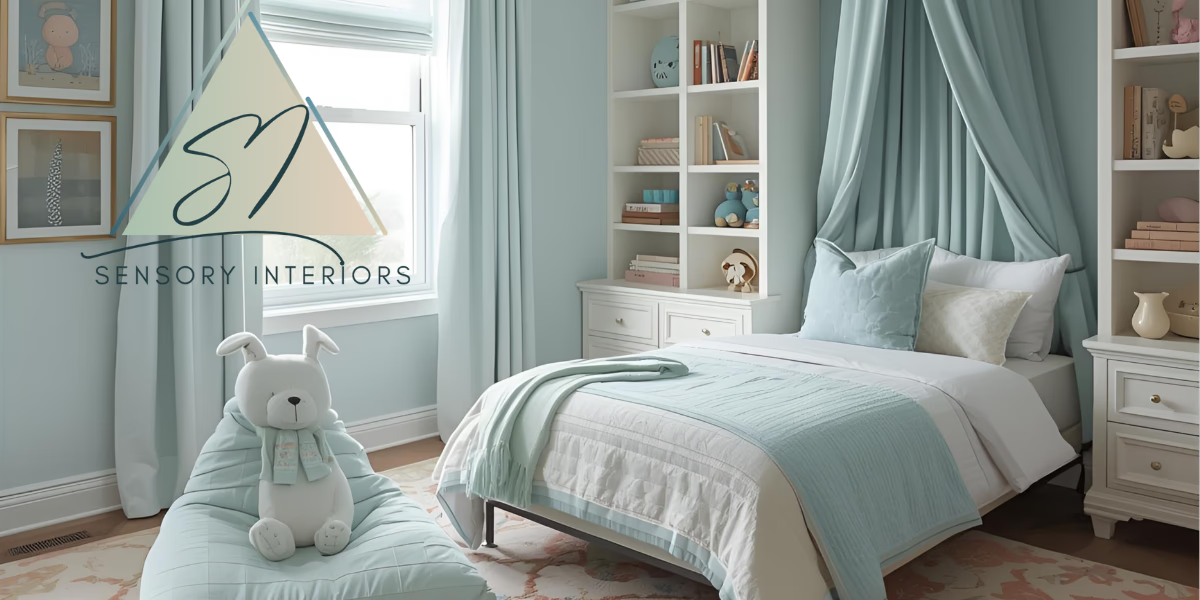
Begin Creating a Space Designed for the Senses
Designing a sensory-friendly space is an investment in comfort, well-being, and quality of life. Whether you’re looking to create a calming home environment, an inclusive classroom, or a supportive workplace, Sensory Interiors is here to help you bring your vision to life.
Our team will guide you through every step of the process, from the initial evaluation to the final construction details. With a personalized approach and a deep understanding of sensory design, we’re committed to creating spaces that truly make a difference.
If you’re ready to transform your space into one that supports real-life needs, reach out to Sensory Interiors today. Let’s start designing an environment that works beautifully for everyone who uses it.